Pickle Robot


Pickle Robot is a pioneer in Physical AI for supply chain applications developing the leading robotic truck unloader to serve the global logistics industry.

Story
Pickle Robot is on a mission to automate global supply chains
We’re applying Physical AI to truck unloading and developing generalized autonomy that will unlock robot orchestration across entire logistics processes.
Generative AI
Pickle fine-tunes pre-trained models to create reliable high-performing generative AI applications specific to the logistics domain.
This enables Pickle to rapidly create custom models for business-specific use cases based on the knowledge encoded in pre-existing models. This approach delivers real value for customers by providing products that just work on day 1 and get better over time.
Machine Vision
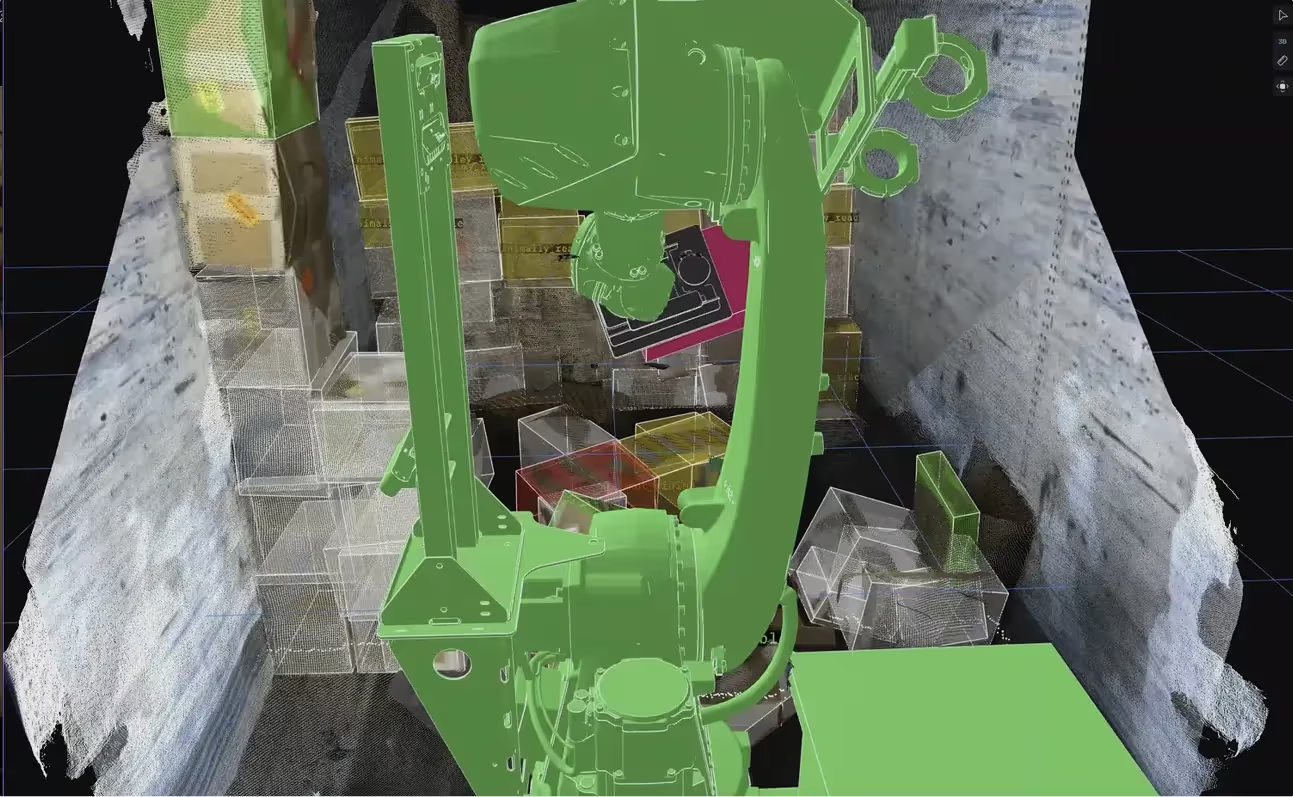
Pickle’s machine vision uses the latest AI libraries to see and analyze complex scenes.
We employ multiple cameras, analog-to-digital conversion and digital signal processing in real- time to manage the complexity. The scenes the systems deal with constantly change. With every package picked and placed, the machine vision is presented with a new scene that unlocks multiple pick and path planning options, but the system can’t sit and think too long because the real world requires picking speed. Our vision system is built to accommodate the real work of unloading trailers as fast as possible.

Autonomy
Pickle’s autonomy is the key to physical AI and shares its DNA with self-driving vehicles.
The autonomy stack combines machine vision with a battery of other sensors to see and sense the freight inside trailers, move the robot vehicle, move the robot arm, grasp packages, manipulate them inside the constrained space of a trailer, and place packages without damaging them. It repeats this sense-move- manipulate coordination 1000’s of times per hour and it must deal with an infinite number of complex scenes.

Mobile Grasping & Manipulation
Pickle uses advanced robotic gripping technology working in coordination with world-class path planning to pick and place packages at human or better-than-human speed.
The constrained physical space of a trailer requires that packages near the ceiling be grasped from the front of the package. Pickle’s suction-based solution excels at picking and placing large heavy packages no matter the location or freight configuration. Gripping methodologies are ultimately bounded by physics and Pickle’s grasping and manipulation capabilities push the boundaries of physics with every pick.

Industrial Hardware
Pickle combines commercially available technology with proprietary engineered components to deliver reliable production systems.
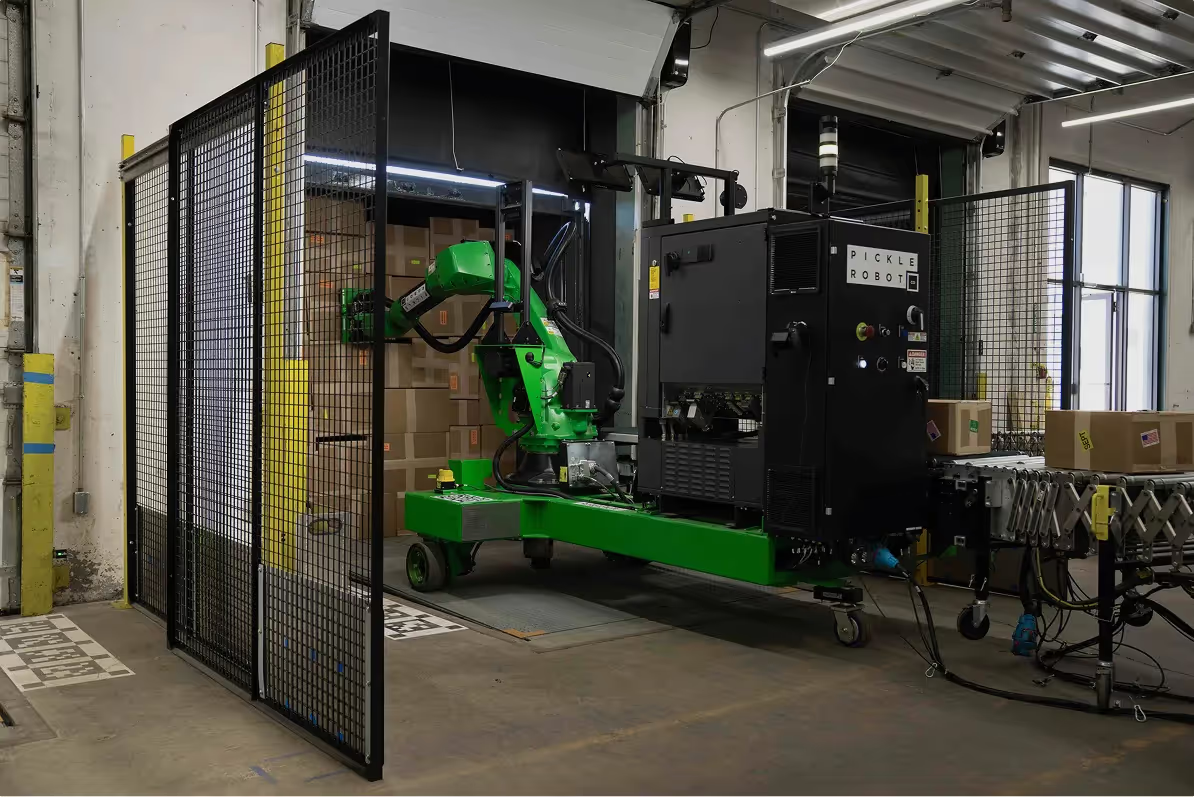
Pickle Robot systems deliver exceptional performance in non-pristine industrial environments by leveraging proven technology and robust components. The systems rely on durable hardware like Kuka robot arms, built specifically for rugged applications, and integrate commercially available equipment like conveyors to avoid unnecessary reinvention. Pickle designs and rigorously tests all components that aren't commercially available, engineering the entire system and software in tandem to ensure reliable operation at scale. Each unit is self-contained, featuring on-board compute and integrated, software-controlled lighting.
Dashboards
Pickle robots generate system level data that is used to improve system performance via AI learning. They also capture operational data that warehouse managers and inbound supervisors use to run efficient operations in real-time.
Operational metrics are presented to operators via cloud- native dashboards. Metrics include picks per hour (PPH), container/trailer unload times, and information about the package mix. With Pickle’s robust data capture engine running in the background, customer specific dashboards can be configured to monitor and manage single robots, fleets of robots within a site, and fleets of robots across multiple sites.